By the CureWithAyurveda Wellness Team
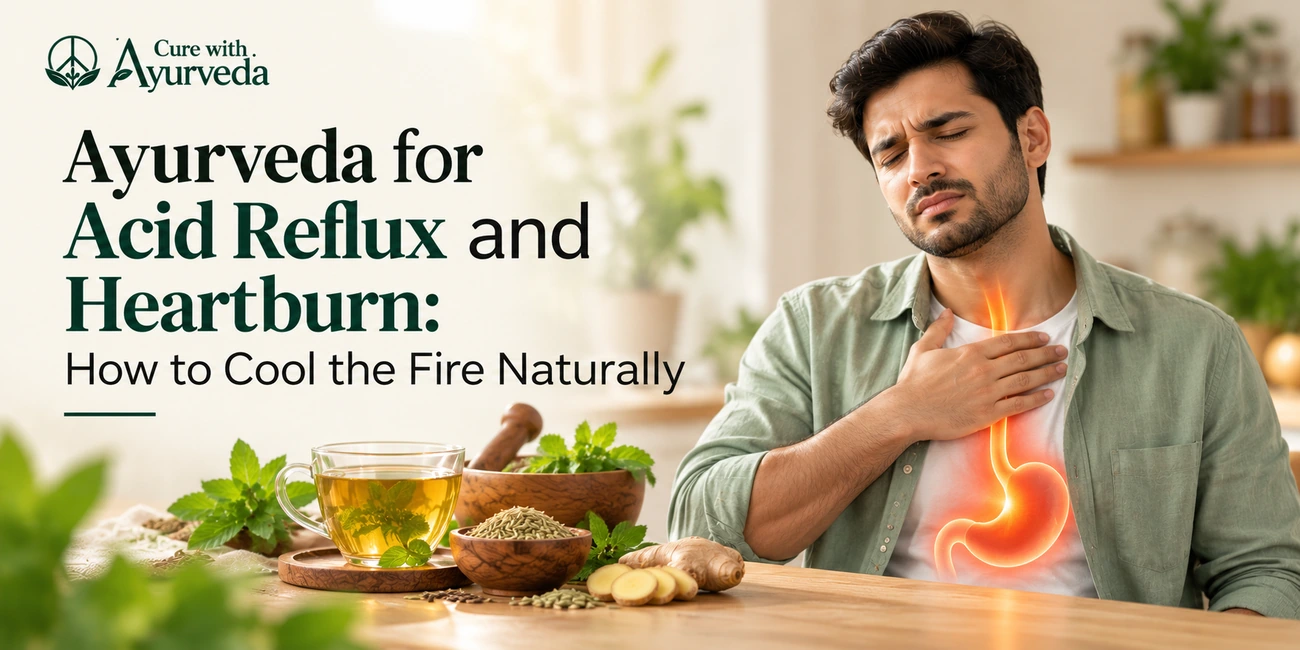
Quick answer: Ayurveda calls acid reflux Amlapitta, which means “sour Pitta.” It happens when Pitta dosha, the body’s fire element, becomes too hot and sharp in the stomach and rises upward. The Ayurvedic plan is to cool and calm that fire: eat regular, moderate meals at set times, avoid spicy, sour, fried and fermented foods, stop eating at least three hours before bed and use soothing herbs like amla, licorice, fennel and aloe vera. Ongoing heartburn should always be checked by a doctor.
That burning feeling behind the breastbone after a big dinner. The sour taste at the back of your throat when you lie down. The cough that seems to come from nowhere at night. Acid reflux is one of the most common digestive complaints in the US and UK, and many people live with it for years, reaching for antacids after every rich meal.
Antacids and acid-reducing medicines help a lot of people, and you shouldn’t stop any prescribed treatment without talking to your doctor. But medication alone doesn’t change why the reflux keeps happening. Ayurveda has been describing this exact problem for over two thousand years, and its advice on food, timing and daily habits is very practical.
What is acid reflux in Ayurveda?
In Ayurveda, acid reflux is called Amlapitta. “Amla” means sour and “Pitta” is the dosha of fire and transformation. It describes a state where digestive fire becomes excessive and acidic, causing burning, sour belching, nausea and discomfort in the chest and throat. Classical texts link it mainly to poor food choices, irregular meals and emotional heat.
Ayurveda sees digestion as a fire, called Agni. A healthy Agni is steady and strong, like a well-tended flame. When Pitta gets out of balance, that fire becomes too sharp and too liquid. It burns rather than digests, and the acidic contents spill upward.
Modern medicine describes reflux in mechanical terms. A ring of muscle at the bottom of the food pipe (the lower oesophageal sphincter) is meant to close after food passes into the stomach. When it relaxes at the wrong time or is under pressure, stomach acid flows back up. Frequent reflux is called gastro-oesophageal reflux disease, or GERD (GORD in the UK).
The two views fit together well. Things that Ayurveda says aggravate Pitta, like spicy, fried and acidic food, alcohol, big late meals and stress, are also the triggers doctors list for reflux.
What are the symptoms of high Pitta acidity?
Common signs of Pitta-type acidity include a burning feeling in the chest or upper stomach, sour or bitter burps, a sour taste in the mouth, nausea, loose stools, feeling hot or irritable, and symptoms that get worse with spicy food, alcohol, hot weather, hunger or stress. Some people also get a hoarse voice or a dry cough, especially at night.
Here is how Ayurveda typically describes the different ways acidity can show up:
| Pattern | What it feels like | Typical triggers |
|---|---|---|
| Pitta (classic heartburn) | Burning, sour burps, irritability, feeling hot, hungry and angry when meals are late | Spicy, sour, fried food, alcohol, coffee, skipping meals, competitive stress |
| Vata-linked | Gas and bloating with reflux, irregular appetite, discomfort that comes and goes, anxiety | Irregular meals, eating on the go, raw and cold food, worry |
| Kapha-linked | Heavy, slow digestion, regurgitation of undigested food, nausea, mucus in the throat | Overeating, heavy and sweet food, eating late, lack of movement |
Most people with reflux have a strong Pitta element, but knowing whether Vata or Kapha is involved too helps you adjust the plan. If you get a lot of gas and bloating alongside the burning, our guide to bloating and gut health will be useful. Not sure of your body type? Try our free dosha quiz.
What causes acid reflux according to Ayurveda?
Ayurveda lists several causes of Amlapitta: eating spicy, sour, salty, fried or fermented foods too often, eating before the last meal has digested, eating late at night, drinking alcohol and too much coffee, suppressing natural urges, sleeping right after meals and holding onto anger, stress or frustration.
Eating too often, or before you are hungry
Ayurveda puts a lot of weight on this. Eating a new meal or snack while the last one is still digesting is said to create Ama, the sticky residue of poor digestion, and to disturb Agni. Constant grazing never gives the stomach a rest.
Big, late dinners
A large meal at 9pm followed by lying on the sofa is one of the most reliable ways to trigger reflux. Lying down with a full stomach makes it easier for acid to flow back. Ayurveda also says digestion is weaker in the evening, so a heavy dinner sits longer.
Hot, sharp and sour foods
Chilli, vinegar, tomatoes, citrus, pickles, fermented foods, fried food, alcohol and coffee all increase Pitta. Not everyone reacts to all of them, but they are the usual suspects.
Emotional heat
Ayurveda is clear that Pitta is as much a mental pattern as a physical one. Anger, frustration, perfectionism and pressure all build heat. Many people notice their reflux flares during stressful times at work. If this sounds familiar, read our guide to Pitta-type stress and how to cool an overheated mind.
What foods should I avoid with acid reflux?
The main foods to limit are those that heat Pitta: chillies and hot spices, deep-fried food, tomatoes and tomato sauces, citrus fruits and juices, vinegar and pickles, alcohol, coffee, fizzy drinks, chocolate, peppermint and very salty or processed foods. Large portions of any food can also trigger symptoms.
| Limit or avoid | Choose instead |
|---|---|
| Chilli, cayenne, hot sauce | Coriander, fennel, cumin, cardamom, fresh herbs |
| Tomato sauces, ketchup | Pesto made with mild herbs, olive oil and lemon-free dressings |
| Orange juice, grapefruit | Sweet ripe fruits like pears, melons, bananas, sweet apples |
| Coffee and black tea | Fennel tea, coriander tea, rose tea, CCF tea |
| Alcohol, especially wine and spirits | Coconut water, water with mint and cucumber |
| Fried food, fast food | Steamed, baked or lightly sautéed dishes |
| Vinegar, pickles, fermented foods | Fresh cucumber, salads with a little olive oil |
| Large late dinners | Smaller early dinners, finished three hours before bed |
Pitta-calming foods to eat more of
- Cooling vegetables: cucumber, courgette (zucchini), asparagus, leafy greens, fennel, sweet potato, pumpkin
- Grains: basmati rice, oats, barley, quinoa
- Proteins: mung beans, red lentils, chicken, white fish, tofu (in moderation)
- Fruits: sweet ripe pears, melon, banana, pomegranate, sweet grapes, soaked raisins
- Fats: a little ghee, coconut oil and olive oil
- Herbs and spices: coriander, fennel, cumin, cardamom, fresh mint, turmeric in small amounts
Ayurveda generally considers sweet, bitter and astringent tastes to be cooling and calming for Pitta, and sour, salty and pungent tastes to be heating. You don’t have to memorise this, but it’s a handy rule of thumb when you’re choosing a meal.
Which Ayurvedic herbs help with heartburn?
The herbs most commonly used in Ayurveda for acid reflux are amla (Indian gooseberry), licorice root (Yashtimadhu), aloe vera, Shatavari, fennel, coriander and the classical formula Avipattikar Churna. They are used to cool Pitta, soothe the stomach lining and support healthy digestion. Speak to your doctor before starting any herb.
| Herb or formula | Why Ayurveda uses it | How it’s usually taken | Caution |
|---|---|---|---|
| Amla (Indian gooseberry) | Cools Pitta despite its sour taste, supports digestion | Powder in water, or as a juice | May lower blood sugar; can interact with blood thinners |
| Licorice root (Yashtimadhu) | Soothes and coats the stomach and throat | Tea or DGL (deglycyrrhizinated licorice) chewable tablets | Regular licorice can raise blood pressure and lower potassium; avoid in pregnancy. DGL is a gentler form |
| Aloe vera (Kumari) | Cooling and soothing for the gut | Inner-leaf, decolourised aloe juice, small amounts | Whole-leaf aloe acts as a strong laxative; avoid in pregnancy |
| Shatavari | Cooling, nourishes the stomach lining | Powder in warm milk or water | Avoid if allergic to asparagus; check if you have hormone-sensitive conditions |
| Fennel seeds (Saunf) | Cools, reduces gas and bloating | Chew half a teaspoon after meals or make tea | Generally safe in food amounts |
| Coriander (Dhania) | Cooling digestive spice | Coriander seed tea or fresh leaves in food | Generally safe in food amounts |
| Avipattikar Churna | Classical formula for Amlapitta | As directed by a practitioner, usually before meals | Mildly laxative; buy from a tested brand |
Two simple home remedies
Fennel and coriander tea. Add one teaspoon of fennel seeds and one teaspoon of coriander seeds to two cups of boiling water. Turn off the heat, cover and leave for 10 minutes. Strain and sip warm or at room temperature after meals.
Chewing fennel after meals. Indian restaurants often offer a small bowl of fennel seeds at the door, and there’s a reason. Chewing half a teaspoon after a meal is an old habit for freshening breath and helping digestion.
Amla is a curious one. It tastes very sour, and you might expect sour things to make reflux worse. But in Ayurveda, amla is described as having a cooling effect after digestion, and it is one of the main herbs used for Pitta. Some people find even amla too sharp at first, so start with a small amount and see how you feel.
Is milk good for acid reflux?
Ayurveda traditionally uses cool or room-temperature milk to calm Pitta, and many people find a small glass soothing. Modern advice is more mixed, because milk can trigger more acid later, and full-fat dairy can make reflux worse for some people. Try a small amount of low-fat milk or a plant milk such as oat or almond and see how your body responds.
This varies from person to person. If milk makes you feel better without a rebound a few hours later, it may suit you. If you also have bloating, gas or mucus, dairy may not be your friend. The best approach is to test it yourself for a week and keep notes.
Is ghee good for acid reflux?
Ayurveda considers ghee cooling and soothing for Pitta, and it’s often recommended in small amounts for people with acidity. A teaspoon with rice or cooked vegetables is a traditional way to use it. That said, large amounts of any fat can slow stomach emptying and make reflux worse for some people, so keep portions small and notice how you feel.
Ghee is also used as a base for several classical Ayurvedic preparations for Amlapitta, such as medicated ghees made with herbs like licorice or Shatavari. These are best taken under the guidance of a practitioner, who can choose the right one and dose for you.
How should I eat to prevent reflux?
How you eat matters as much as what you eat. Eat at regular times, have your largest meal at lunch, keep portions moderate (Ayurveda suggests filling the stomach about half with food, a quarter with liquid and leaving a quarter empty), chew well, avoid eating when angry or rushed, and stop eating at least three hours before lying down.
These simple habits are some of the most effective tools you have:
- Eat at set times. Pitta hates hunger. Waiting too long between meals often triggers burning. Aim for three regular meals.
- Lunch is the main meal. Ayurveda says digestive fire is strongest around midday. A substantial lunch and a lighter dinner reduce the load at night.
- Leave space in your stomach. Overfilling increases pressure and makes reflux more likely. Put your fork down when you feel about three-quarters full.
- Chew slowly. Rushed eating means you swallow more air and digest less well.
- Eat calmly. Avoid eating at your desk, while driving or in the middle of an argument.
- Don’t drink lots of cold water with meals. Small sips of warm or room-temperature water are better.
- Finish dinner early. Leave at least three hours between your last meal and bedtime.
What can I do for reflux at night?
To ease night-time reflux, raise the head of your bed by 10 to 20 centimetres using blocks under the bed legs or a wedge pillow, eat dinner at least three hours before bed, avoid alcohol and late snacks, wear loose clothes, and try sleeping on your left side, which some studies suggest reduces reflux compared with lying on the right.
Night reflux is common and particularly frustrating because it disturbs sleep, which then makes stress and digestion worse the next day. Stacking extra pillows usually doesn’t help much, because it bends you at the waist and can push on the stomach. Raising the whole head end of the bed or using a wedge pillow works better.
A cup of warm fennel tea after dinner, a short slow walk and a calm, screen-free evening all help. For a full bedtime routine, see our Ayurvedic guide to insomnia and better sleep.
Does weight affect acid reflux?
Yes. Carrying extra weight around the middle increases pressure on the stomach, which makes it easier for acid to flow back up. Doctors often find that even a modest amount of weight loss improves reflux symptoms. In Ayurveda, steady, healthy weight comes from strong Agni, regular meals and daily movement.
If you’re working on this, our guide to weight and metabolism in Ayurveda explains how to approach it without crash dieting, which tends to aggravate Pitta and Vata.
Can stress cause acid reflux?
Stress doesn’t directly cause reflux on its own, but many people find stress makes their symptoms worse and more noticeable. Ayurveda sees it clearly: emotional heat from anger, frustration and pressure adds to physical Pitta. Calming the mind is part of calming the stomach.
Here are some cooling practices for the mind:
- Sheetali breath: Curl your tongue into a tube (or breathe through slightly parted teeth if you can’t), breathe in slowly through the mouth, close the mouth and breathe out through the nose. Repeat 10 times. It is a classic yogic cooling breath.
- Time in nature: a walk by water, in a park or under trees after work.
- Moonlight walks: Ayurveda describes evening walks in moonlight as soothing for Pitta. It is lovely if you can manage it.
- Less competition in downtime: swap intense workouts for swimming, yoga or walking during flare-ups.
For more on how chronic tension affects the whole body, read our guide to chronic stress and anxiety.
A 14-day plan to calm reflux
Days 1 to 3: Remove the obvious triggers: chilli, alcohol, coffee, fried food, tomatoes and citrus. Set fixed meal times.
Days 4 to 7: Make lunch your main meal. Keep dinner small and finished three hours before bed. Start fennel and coriander tea after meals.
Days 8 to 10: Raise the head of your bed. Add 10 minutes of slow walking after dinner. Try Sheetali breath before bed.
Days 11 to 14: Talk to a practitioner about herbs such as amla, DGL licorice or Avipattikar Churna if you’d like to add them. Keep a simple food and symptom diary so you can spot your personal triggers.
After two weeks, slowly reintroduce one food at a time, every three days or so, and note what happens. Many people find they can enjoy some foods again in moderation once their digestion settles.
When should I see a doctor about heartburn?
Heartburn is common, but it is not always simple. See a doctor if you have:
- Heartburn most days, or for more than three weeks despite over-the-counter treatment
- Difficulty or pain when swallowing, or food that feels stuck
- Unexplained weight loss
- Vomiting, especially vomiting blood or material that looks like coffee grounds
- Black, tarry stools
- A persistent cough, hoarseness or sore throat
- New heartburn if you’re over 55
Chest pain can also be a sign of a heart problem. If you have chest pain that spreads to your arm, jaw, neck or back, or comes with sweating, breathlessness or nausea, call emergency services straight away.
Long-term reflux can damage the lining of the food pipe, so getting the right diagnosis matters. Ayurveda can work well alongside medical care, and a good practitioner will want you to have any red-flag symptoms checked. If you’d like guidance on building a personal plan, reach out to the Cure With Ayurveda team.
Frequently asked questions
What is the fastest Ayurvedic remedy for acidity?
For quick, gentle relief, many people use cool fennel and coriander tea, chew a few fennel seeds or sip a small glass of coconut water. These help soothe mild symptoms. Frequent or severe heartburn needs proper assessment.
Is amla good for acid reflux?
Ayurveda considers amla one of the best herbs for Pitta and acidity, because it is described as cooling after digestion despite its sour taste. Start with a small amount, as some people find it too sharp at first.
Can aloe vera juice help with heartburn?
Inner-leaf, decolourised aloe vera juice is traditionally used in Ayurveda to cool and soothe the gut. Whole-leaf aloe is a strong laxative, so check the label. Avoid it during pregnancy.
What should I drink for acid reflux?
Room-temperature water, fennel tea, coriander tea, chamomile tea and coconut water are gentle choices. Avoid coffee, alcohol, fizzy drinks and citrus juices, which often make reflux worse.
Is lemon water good for acid reflux?
Lemon is sour, and Ayurveda says sour taste increases Pitta. Many people with reflux find lemon water makes their symptoms worse. Plain warm water or fennel tea is a safer morning drink.
Can Ayurveda cure GERD permanently?
Ayurveda can help many people reduce reflux through diet, routine and herbs, but GERD has different causes and severity. It should be diagnosed and monitored by a doctor, with Ayurveda used as part of the overall plan.
This article is for general education and is not medical advice. Chest pain can be a sign of a heart attack: call emergency services if in doubt. Talk to your doctor before starting any herb or supplement, especially if you are pregnant, breastfeeding or taking medication.